BACK

Mobile App & Web platform, MusicTech
2021—2025
MuseScore
MuseScore is one of the world’s largest online sheet music platforms, bringing together a global community of musicians, learners, composers, and music lovers.
Across web and mobile, MuseScore reaches millions of musicians worldwide, with 100M yearly web visitors, 10M+ Google Play downloads, and a strong iOS presence with 76K App Store ratings.

My responsibilities
•
Owned UX and product flows for the MuseScore mobile app, helping musicians discover, practice, and interact with sheet music more easily.
•
Led end-to-end product design from discovery to delivery, improving navigation, playback, score interaction, usability, and product-wide UX consistency.
•
Supported product decisions through research, data insights, A/B testing, and iterative improvements.
•
Evolved design system components and documentation to reduce design debt, improve team alignment, and create a more consistent experience across the app.
Achievements
•
Redesigned core MuseScore flows across practice, discovery, learning, account management, and brand migration, improving the end-to-end journey from finding scores to practicing them.
•
Increased key engagement metrics through A/B-tested improvements: saved scores grew by 8%, favorites by 4%, comments usage by 15%, full-screen mode by 6%, and metronome/tempo usage by 3%.
•
Improved monetization-related metrics by 3.3% by moving key actions closer to the main score experience and making high-value interactions easier to discover.
•
Built Songbooks from scratch into a structured, searchable practice library, turning collections into a new product area with discovery, ratings, comments, onboarding, and key interaction states.
•
Redesigned the Courses experience to make learning more structured, with clearer course discovery, lesson progress, active playback, and return-to-learning flows.
•
Reduced product complexity across legacy screens by improving navigation, hierarchy, readability, and access to important actions on small mobile screens.
•
Helped migrate MuseScore to the new Muse identity by rebuilding UI patterns, adapting legacy flows, and contributing reusable components to a more scalable design system.
Improving the in-app practice experience
The challenge was to encourage users not just to view or search scores, but to actively practice within the product.
The key shift was moving from a passive score-viewing experience to an active, guided practice experience.
Research revealed three key barriers to in-app practice: an overloaded interface, limited readability on small screens, and missing or hard-to-find practice tools.

I redesigned the score page to address the main barriers to in-app practice: overloaded navigation, hidden functionality, and poor readability on small screens.
The new design gives more space to the sheet music, brings key practice tools closer to the user, and introduces a focused practice mode with quick access to zoom, settings, mixer, and metronome.

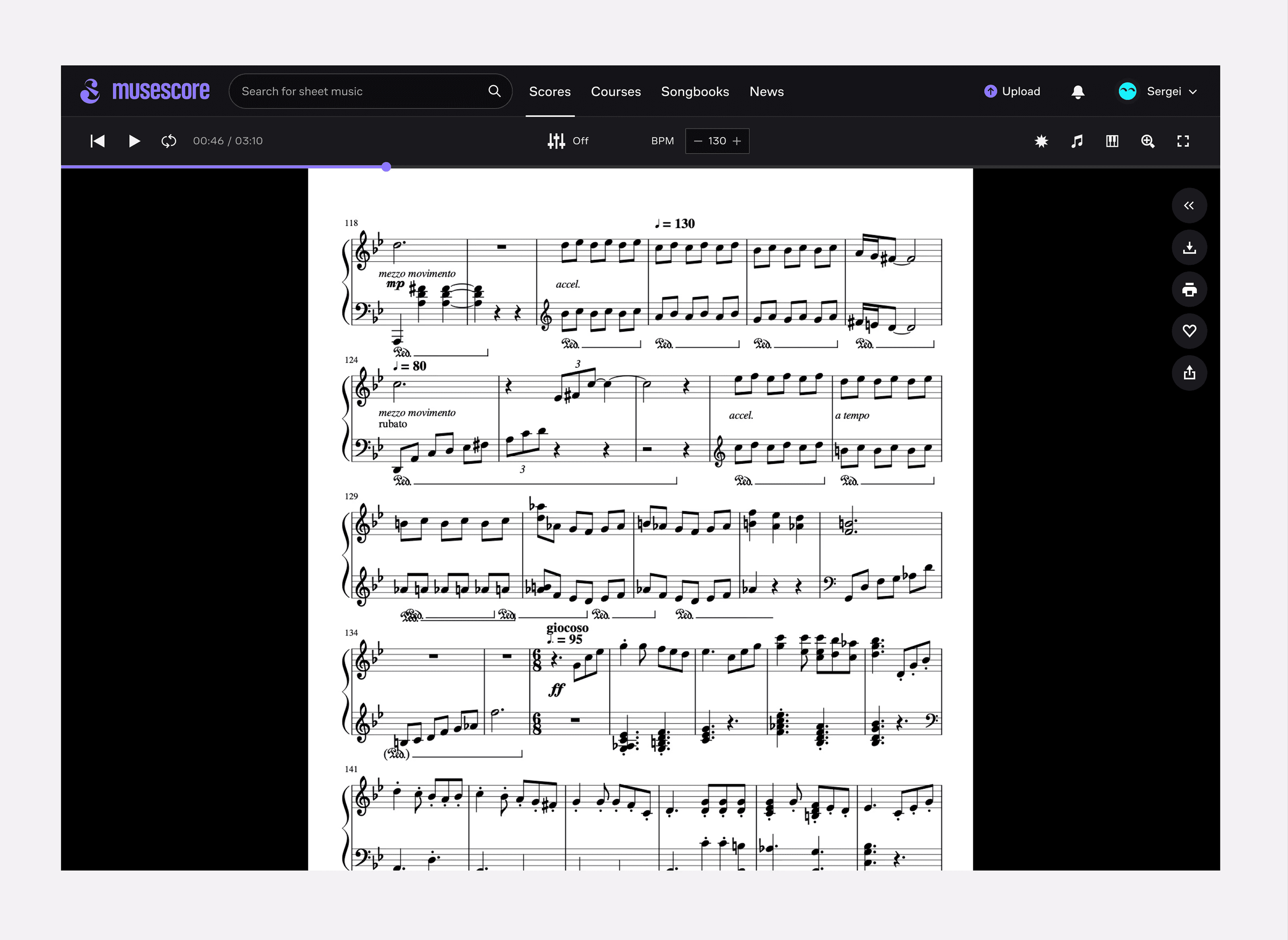
We tested the redesign through A/B experiments focused on action visibility, score engagement, and access to practice tools. After each test build, I supported design QA to ensure the final experience was visually consistent and ready for release.
•
Moving key actions to the main screen increased saved scores by 8%, favorites by 4%, and monetization metrics by 3.3%.
•
The new flow also increased full-screen mode usage by 6%, while simplified access to score features increased comments usage by 15% and metronome/tempo usage by 3%.

Improved the score viewer by increasing readability, reducing interface clutter, and making key practice tools easier to access.
The redesign supports portrait, full-screen, and landscape modes, giving users a clearer and more focused practice experience.
Easy way to find a score
MuseScore is a large sheet music platform where musicians discover, read, and practice scores. I worked on improving the search experience, helping users quickly find the right scores across different instruments, genres, difficulty levels, and versions.

Turning scores into a practice library
The Songbooks experience was designed from scratch as a new product area inside the MuseScore. The scope included the full UX and UI flow: Songbook detail pages, search and discovery, onboarding, comments, ratings, and key interaction states.
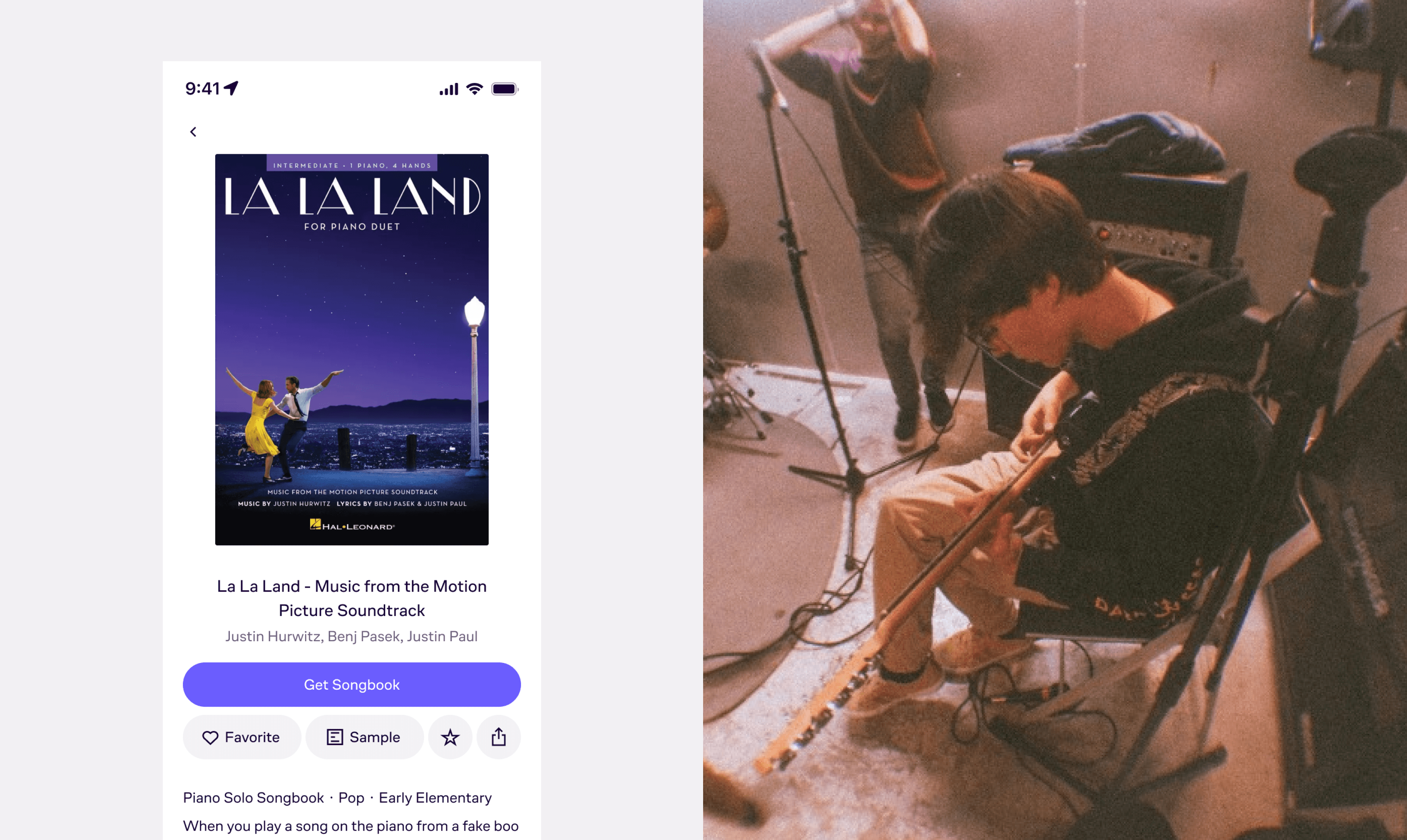


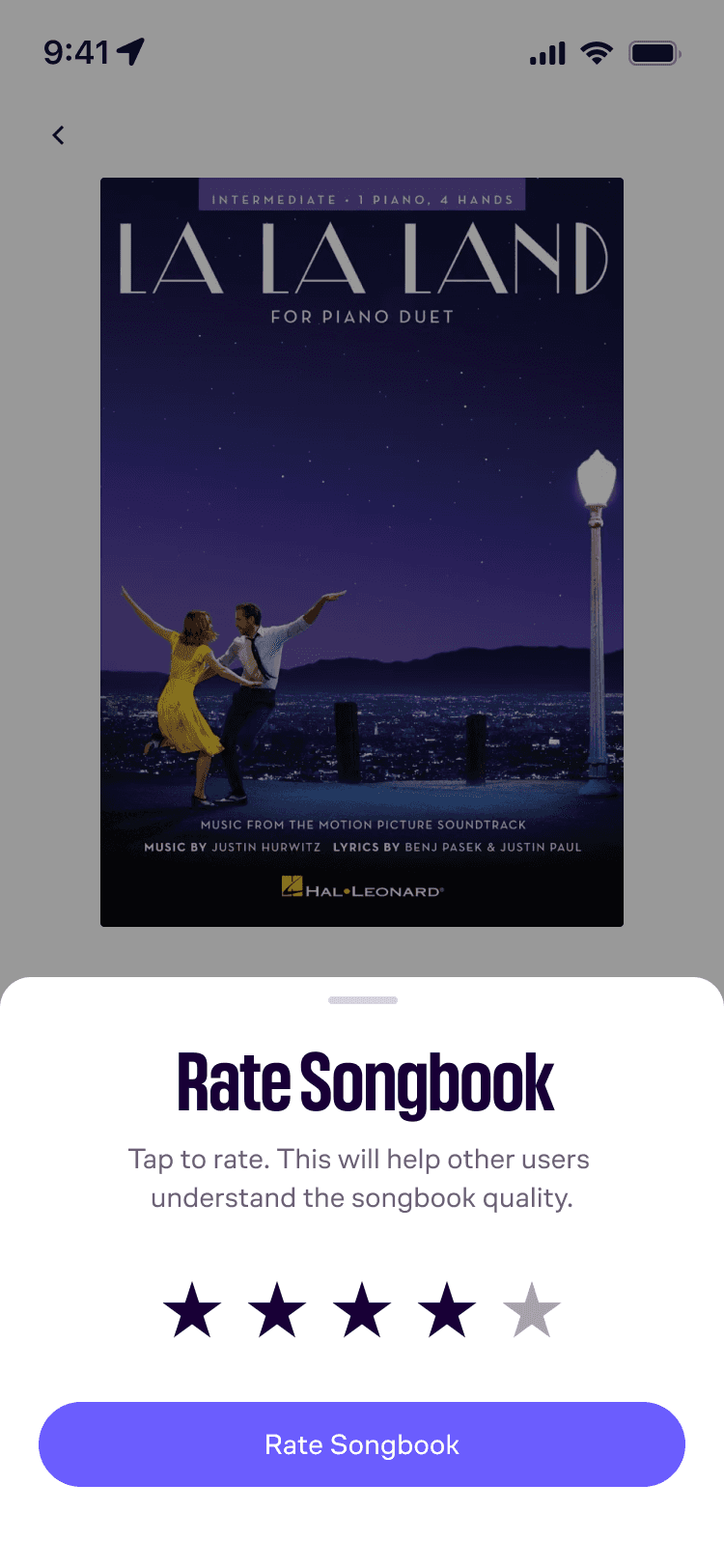
Instead of treating Songbooks as a simple saved-scores feature, the design shaped them into a structured music library where users could discover collections, evaluate quality, and return to pieces they want to practice. The project was owned end to end, from early product concepts and user flows to final screens and development-ready specifications.
Creating a clearer path through music courses
Courses already existed across MuseScore, but the experience lacked clear navigation, progress tracking, and a simple way to continue learning.


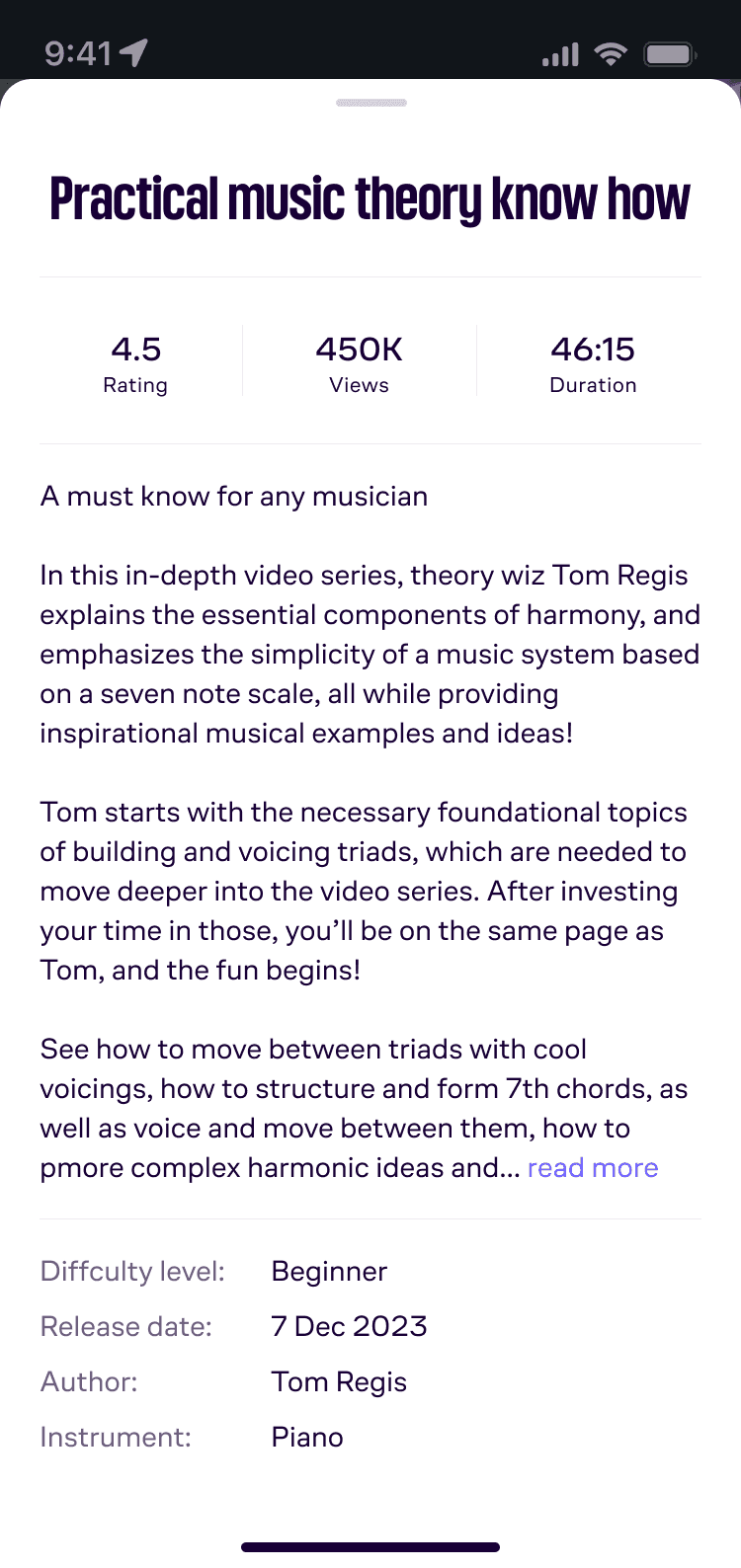
The redesign introduced a complete UX/UI system for course discovery, course pages, active playback, and progress tracking. This made it easier for users to browse courses, understand what to watch next, and return to lessons they had already started.
Simplifying account management
The profile page was redesigned to make account management clearer and easier to use. The old experience felt overloaded, with profile details, settings, support, purchases, and legal links mixed into one long list.
The new UX introduced a cleaner profile header, stronger visual hierarchy, grouped navigation, and faster access to key account actions, turning the profile into a more personal and structured space for managing subscriptions, preferences, and activity.

Bringing MuseScore into the new Muse identity
Muse Group partnered with COLLINS, an award-winning American strategy and design company, to create a new brand identity across the entire Muse ecosystem, including MuseScore, Ultimate Guitar, Audacity, MuseClass, and other products.
As part of this transformation, the MuseScore product needed to be fully redesigned and migrated to the new visual language. The work covered much more than a UI refresh: typography, color tokens, components, spacing, corner radius, shadows, imagery, icons, and interaction patterns were all reworked to match the new brand system.
The redesign included updating legacy screens, rebuilding key flows with the new design system, adapting components for use cases, and preparing development-ready specifications. The goal was to make the app feel more modern, consistent, and connected to the wider Muse product family, while keeping the experience clear and usable for musicians.

Beyond the MuseScore
My work went beyond individual MuseScore features and contributed to broader design initiatives across Muse Group. I worked on reusable UX, UI, and design system solutions that were adopted across products, helping teams move faster, reduce design debt, and maintain consistency across the ecosystem.
I also participated in internal hackathons, shaping early concepts, visual directions, and interface ideas for new projects. Alongside product design, I contributed to App Store visuals, in-app promo screens, and email design assets, ensuring a consistent brand and product experience across different user touchpoints.