BACK

Website & Mobile App, Brand Campaigns, Creative Production
2019—2020
Pure Dating App
Pure Dating App is a bold, privacy-first dating platform for open-minded people who want to meet honestly, explore their desires, and connect on their own terms.
Across iOS and Android, Pure has grown into a global dating product with 10M+ Google Play downloads, 95% year-over-year registration growth, and a distinctive sex-positive brand voice built around safety, privacy, and real connections.
Joined Pure as the company’s first and only product designer, owning the full mobile app design process from requirements and concept development to specs, testing, launch, and analytics.
My responsibilities
•
•
Combined product design with management tasks, including setting tasks for the engineering team, coordinating implementation, and reviewing production builds.
•
Designed key product features from scratch, from requirements gathering and UX/UI concepts to owner approval, technical alignment, implementation, and testing.
•
Owned the design delivery for fast-paced two-week sprint cycles on a live mobile app with a large active user base. I was responsible for turning sprint goals into clear UX/UI solutions, preparing designs for development, aligning scope with the owner and engineering team, supporting implementation, testing releases, and ensuring that a high volume of product improvements was delivered on time and at quality.
•
Collaborated directly with illustrators and motion designers from Shuka Brand Bureau, integrating their visual and motion work into product designs while keeping flows, brand direction, and the overall app experience consistent.
Turning chat safety into a core product experience
The challenge was to reduce scam activity inside the app and protect users from suspicious conversations without breaking the natural flow of dating chats. At that stage, scam-related complaints were one of the biggest problems for the product, directly affecting App Store ratings and user trust. Many negative reviews and low ratings came from users who felt they were being tricked, pushed to send money, or moved off-platform by fake profiles.
Research revealed that most scam conversations followed repeated patterns. Scammers often tried to move users to other social platforms, ask for phone numbers, emails, bank card details, external links, money transfers, or intimate photos that could later be used for blackmail. I analyzed real cases, user reports, chat behavior, and common trigger phrases to understand what warning signals appeared before the scam happened.

Based on these insights, I designed an in-chat warning system that detected risky phrases and showed contexrfrtual safety alerts only to the person receiving the suspicious message. The goal was not only to reduce harmful behavior, but also to educate users in the moment, helping them recognize scam patterns, stay cautious, and continue communicating safely inside the app.
Achievements
•
Designed and launched the app’s anti-scam experience from scratch, including scam pattern research, trigger-based detection logic, warning flows, and private in-chat safety alerts.
•
Improved user trust and app perception by addressing one of the biggest sources of negative App Store reviews, helping raise the rating from around 3.1-3.5 stars to 4.5+ within a few months.
•
Reduced successful scam-related cases by ~35% through real-time in-chat warnings, while also working with the engineering team to track suspicious activity patterns and automatically flag or ban scam accounts. As a result, the number of active scammers in the app dropped by 50%+.
Making private conversations feel truly private
I designed privacy-first chat features that helped users feel safer when sharing personal, sensitive, or intimate content. Together, these features created a more protected space for open conversations, where users could share more freely, feel in control of their privacy, and trust that their boundaries would be respected.
Self-destructing photos
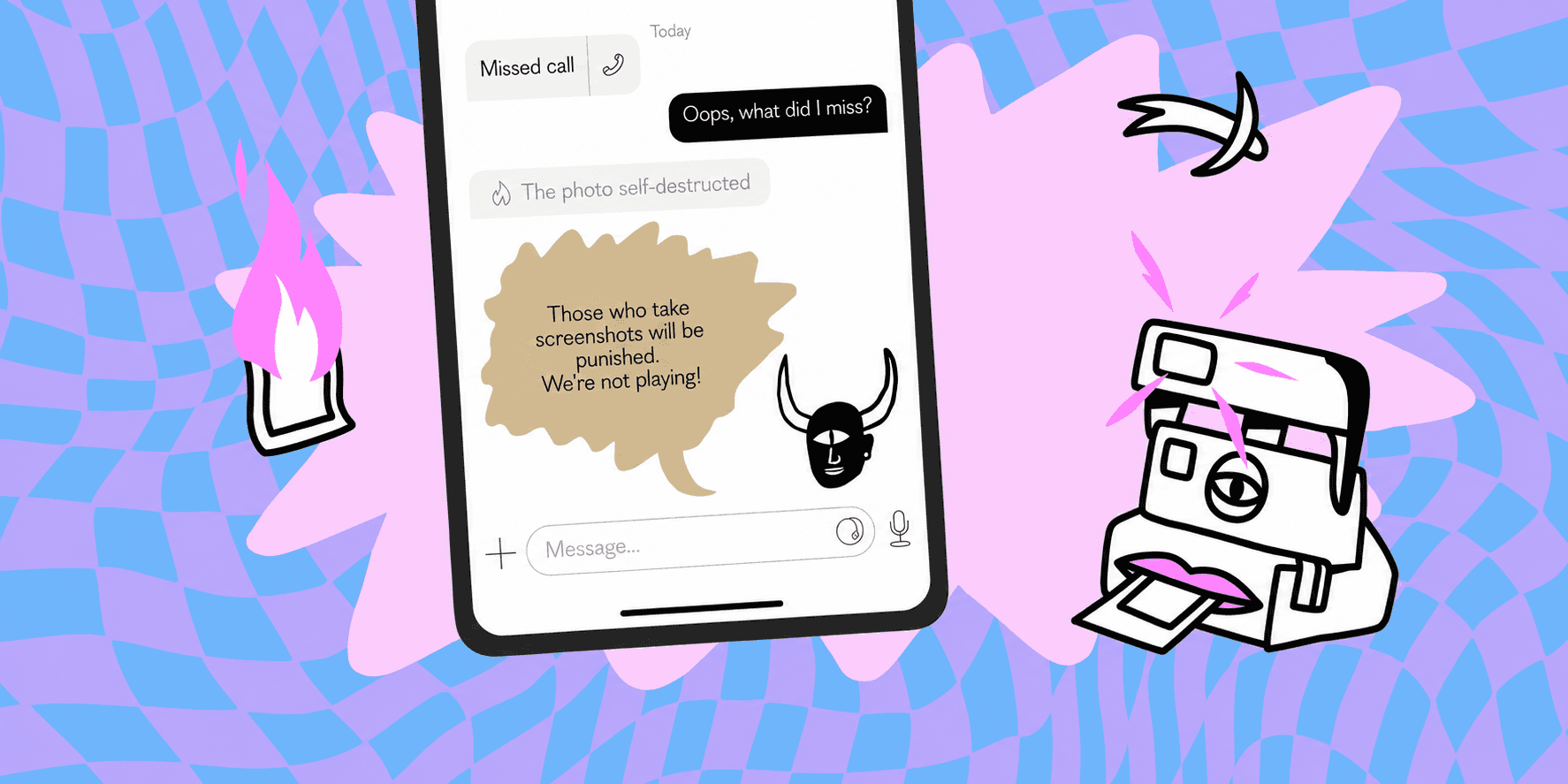
Self-destructing photos helped Pure bring a new level of privacy into dating chats before this pattern became common in the category. I pushed the idea as a safer way to share intimate content: a user could send a photo with a timer, the recipient could open it only once, and the image disappeared immediately after viewing with no option to save it.
This made private conversations feel more protected, giving users the confidence to share openly while keeping control over their boundaries.


Screenshot protection
To protect private conversations from being captured without consent, screenshots and screen recordings were restricted inside chats. If someone attempted to capture the screen, both participants were notified, making the interaction feel more transparent, respectful, and consent-driven.
Private photo storage with in-app verification
Photos were stored inside Pure instead of appearing in the user’s phone gallery, keeping sensitive content separated from personal device storage. To make shared photos feel more trustworthy, selfies taken through the Pure camera received a visible in-app badge, showing that the image was captured inside the app rather than uploaded from elsewhere.


Safety Signal
Safety Signal was designed for the moment when an online match becomes an offline meeting. Users could activate it before a date and share their location with trusted contacts, adding a safety layer that helped them feel more protected and in control when meeting someone new.
Achievements
•
Increased safe photo sharing in chats by ~24% with self-destructing photos.
•
More than 40% of active users started using Pure’s in-app photo gallery, keeping private photos inside the app instead of the phone gallery.
•
The verified selfie badge became an additional trust signal in chats and helped reduce scam reports related to fake or misleading photos by ~20–25%.
•
Helped make Pure feel safer for intimate dating by turning privacy, verification, and offline protection into product-level safeguards. The safety features helped reduce scam- and privacy-related reports by ~15–20%.
Making the race for attention feel like a game worth winning
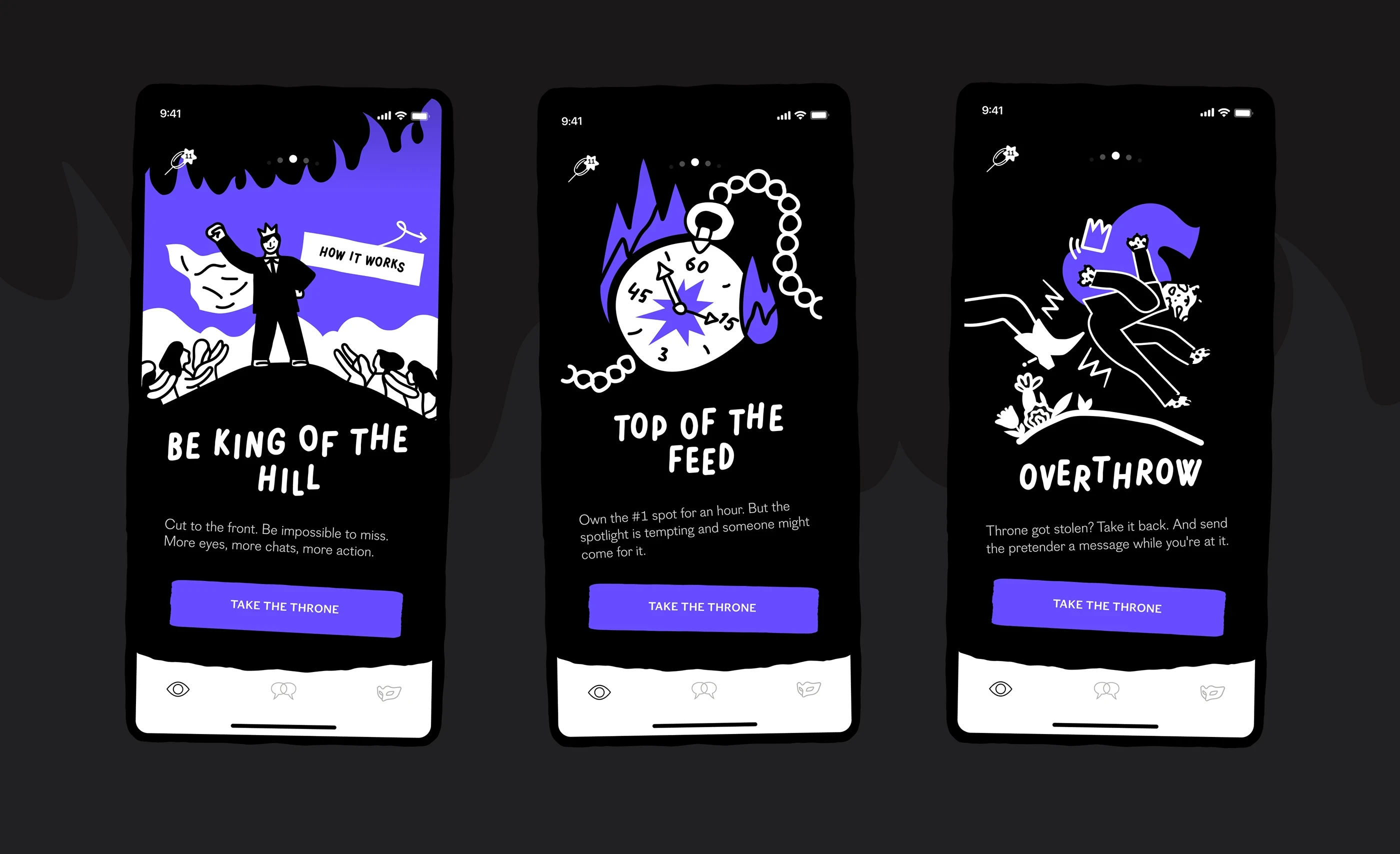
I worked on King of the Hill and Pure Queen, premium features that turned top-feed placement into a playful competition. Users could buy the most visible spot, feel like the king/queen of the feed, and get more chances to be noticed, matched & messaged.


Achievements
•
Increased conversion to paid visibility add-ons by ~4% by making King of the Hill and Pure Queen feel like a playful status game rather than a standard boost.
•
Helped King of the Hill and Pure Queen become a meaningful in-app purchase stream, contributing an estimated ~8–10% of monthly premium revenue after launch.
Together, these features helped Pure evolve beyond a dating app into a more controlled, trusted, and emotionally safer space for meeting new people. By combining privacy-first sharing, anti-scam protection, verified photos, offline safety, and playful paid visibility mechanics, the product gave users more confidence, more control, and more reasons to stay engaged.
